


Our Challenges & Opportunities
Human-made emissions of carbon dioxide and other greenhouse gases are causing warming that is not typical of the historical record.
These emissions are likely to result in negative impacts to
Western New York, including the Town of Aurora.
Increases in average annual temperature, frequency of extreme heat and precipitation events, and changes in habitat will all bring potentially negative impacts to our region. Data showing historical atmospheric concentration of carbon dioxide (Figure 4) and an increase in Erie County’s historically observed vs. projected temperature (Figure 5) help to visualize these changes. Even under scenarios that assume humans greatly reduce greenhouse gas emissions, the challenge to protect life, property, and vulnerable populations in our community is significant.


Click on the boxes below to learn more about the specific challenges & opportunities in our town.
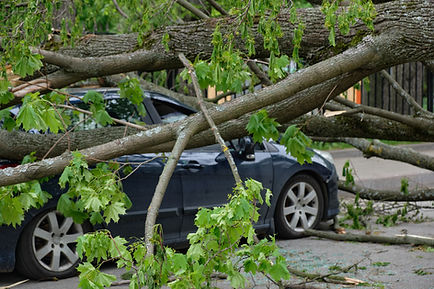
Extreme weather events such as floods, blizzards, droughts, wildfires, and heatwaves are becoming more frequent due to climate change. Rising temperatures and changing precipitation patterns are increasing the intensity of these events, making them more devastating for our community. Learn more about these challenges.
Annual average temperatures across NYS have been steadily increasing over the last few decades. This trend includes an increase in the number of extremely hot summer days above 90 degrees Fahrenheit. Locally, the month of July is consistently the hottest month in our region. How will this impact our town in the future?
Flooding
Water & Soil
By the year 2100 an estimated 50 million people in the U.S. could relocate to more climate friendly regions, including 13.1 million displaced by sea level rise. Our Great Lakes region is predicted to be
especially attractive to climate migrants with one study rating Buffalo as the #2 destination. Why?